
51 Pegasi b: 7 Incredible Facts About The Pioneer Exoplanet
Nestled deep within the northern celestial constellation of Pegasus, sitting roughly 50 light-years away from our own terrestrial home, lies a legendary world that fundamentally and irreversibly altered the course of human astronomy forever. This historic celestial body is 51 Pegasi b—universally recognized as the very first exoplanet ever discovered orbiting a normal, main-sequence star similar to our Sun, effectively blowing wide open the floodgates to the modern, high-tech era of galactic planet hunting and cosmic exploration.
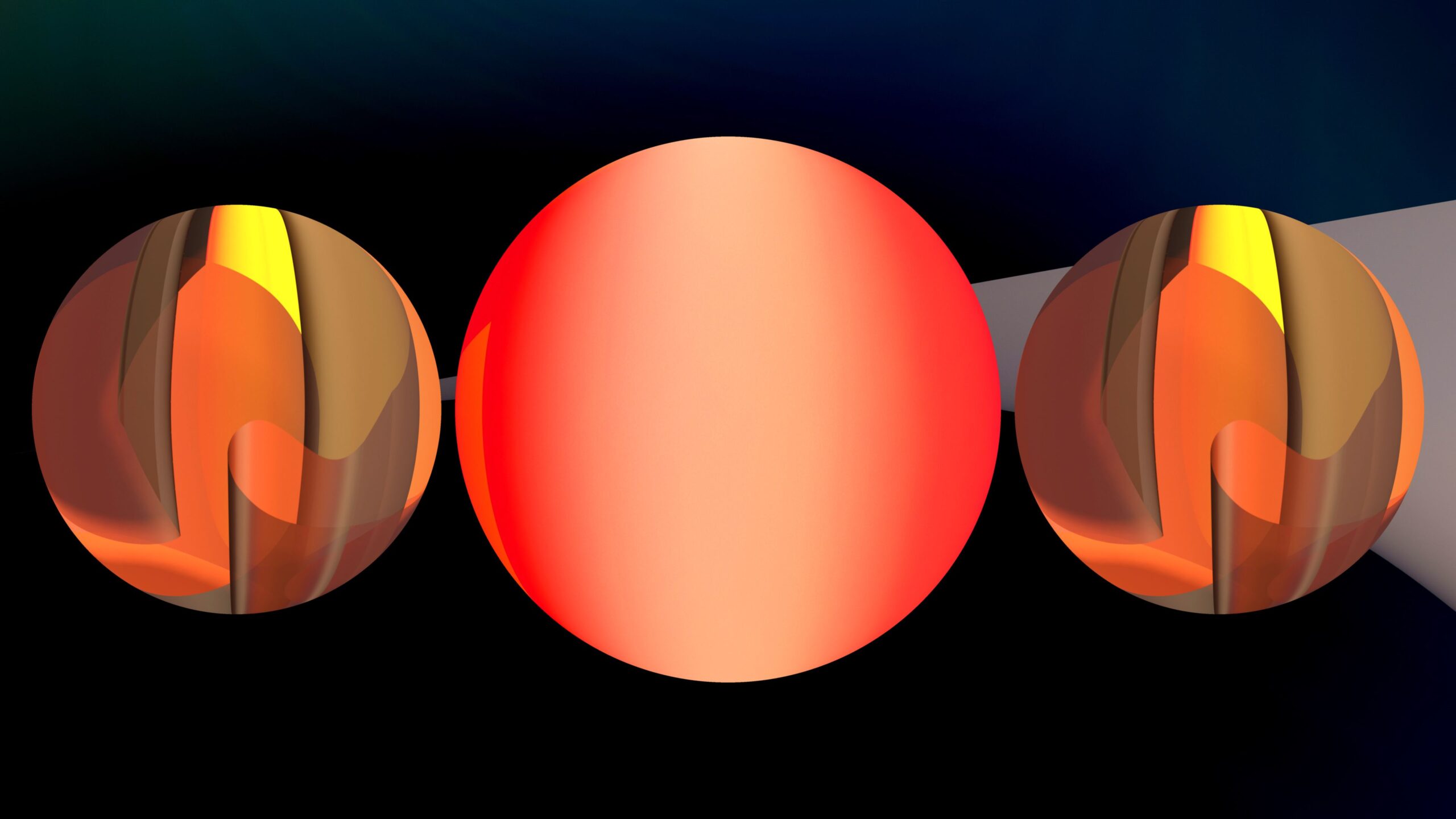
Revolving with astonishing tightness around its yellow dwarf parent star in a blistering, scorching four-day orbital period, this pioneering world shattered long-held scientific dogmas, broke conventional theoretical rules, and forced astrophysicists worldwide to completely rewrite how planetary systems form and evolve. It introduced humanity for the very first time to the bizarre, extreme class of cosmic objects known as “Hot Jupiters”—massive gaseous giants lurking dangerously and paradoxically close to their fiery stellar suns.
As we peel back the comprehensive layers of this expanded deep-dive article, we will explore with absolute granularity why 51 Pegasi b remains the single most significant milestone in twentieth-century space exploration history, examining its mechanics, its fiery atmospheric dynamics, its detailed comparison with our own solar system’s Jupiter, and its permanent intellectual legacy. Read our guide on exoplanet discovery.
1. The Historic Discovery That Completely Changed Modern Astronomy
Before October of 1995, humanity had never found a single definitive, scientifically verified planet existing outside our own solar system that orbited a normal, hydrogen-burning star. That absolute reality changed forever when visionary Swiss astronomers Michel Mayor and Didier Queloz officially announced the groundbreaking detection of 51 Pegasi b using the highly sophisticated and sensitive radial velocity method at the Haute-Provence Observatory in southern France.
By measuring the periodic, minute Doppler shifts and the subtle gravitational wobble of the host star caused by an unseen massive companion tugging on it, they proved beyond an absolute shadow of a doubt that other suns possessed worlds revolving around them. This monumental, paradigm-shifting achievement ultimately earned those pioneering scientists the Nobel Prize in Physics, cementing 51 Pegasi b permanently in history books as a true turning point for human knowledge.
The public announcement stunned the global astrophysical community because it directly violated long-established theoretical rules of planetary formation. Prior to this landmark moment, mainstream scientific models assumed all other planetary systems would closely mirror our own orderly, predictable setup, which is characterized by small rocky terrestrial worlds occupying the inner orbits and massive gas giants lingering far out in the cold outer expanses.
The sheer, undeniable existence of 51 Pegasi b proved immediately that the Milky Way galaxy was infinitely stranger, far more dynamic, and vastly more diverse than anyone had ever dared to theorize, completely shifting our collective cosmic outlook and setting off a modern golden age of discovery.
2. The Birth of the Infamous “Hot Jupiter” Paradox
The single most shocking and disruptive aspect of 51 Pegasi b upon its initial discovery was its impossibly extreme, counterintuitive orbital location. It whips around its yellow dwarf host star in a blazing, frantic 4.23 Earth days, maintaining an average orbital distance of only about 7 million kilometers—roughly one-eighth of Mercury’s tightest distance from our own Sun.
Astrophysically speaking, a massive gas giant possessing nearly half the physical mass of Jupiter has no logical business existing that close to a luminous, scorching star, because intense stellar winds, coronal mass ejections, and severe thermal radiation should have completely stripped away, evaporated, or entirely prevented its gaseous envelope from accumulating during the system’s formation phase.
This profound scientific puzzle forced astrophysicists worldwide to urgently invent, debate, and refine the complex, groundbreaking theory of planetary migration. Theoretical modelers deduced through rigorous computer simulations that 51 Pegasi b could never have formed in situ where it currently resides; instead, it must have originally materialized far out in the cold, icy, outer regions of its primitive star system, identically to how our own Jupiter formed.
Over hundreds of millions of years of chaotic gravitational friction, tidal interactions, and momentum exchange with the dense primordial protoplanetary disk, it spiraled steadily inward, creating the legendary, terrifying class of worlds we now classify as “Hot Jupiters.”
3. Scientific Profile: Comprehensive Architecture of the World
| Planet Classification | Hot Jupiter (Massive Gaseous Exoplanet) |
| Distance from Earth | ~50 Light-Years (Constellation Pegasus) |
| Estimated Mass | ~0.46 times the Mass of Jupiter |
| Orbital Revolution Period | 4.23 Earth Days |
| Method of Discovery | Radial Velocity (Doppler Spectroscopy) |
4. Detailed Comparative Analysis: 51 Pegasi b vs. Jupiter
To truly appreciate how physically bizarre and extreme 51 Pegasi b really is, it helps to place it side-by-side with our own solar system’s resident gas giant, Jupiter. While both planetary bodies are fundamentally composed of deep hydrogen and helium fluid envelopes, their thermal environments, orbital locations, and evolutionary trajectories couldn’t possibly be more diametrically opposed.
| Comparative Feature | 51 Pegasi b | Our Solar System’s Jupiter |
|---|---|---|
| Orbital Distance | ~0.05 AU (7 million kilometers) | ~5.20 AU (778 million kilometers) |
| Surface / Atmospheric Temp | ~1,000°C (Blistering, Glowing Heat) | ~-110°C (Deep, Cold Deep-Space Freeze) |
| Atmospheric Profile & Winds | Bloated, puffy radius with supersonic jet streams | Dense, structured storm bands and Great Red Spot |
| Evolutionary History | Migrated inward dramatically over eons | Remained stable in outer orbit location |
5. Scorched Atmosphere, Tidal Locking, and Supersonic Winds
Because 51 Pegasi b hugs its parent star with such dangerous intimacy, its surface and upper atmospheric temperatures skyrocket to a brutal 1,000 degrees Celsius, comfortably exceeding 1,800 degrees Fahrenheit. This intense, unyielding thermal assault causes its massive gaseous outer layers to expand dramatically, giving the planet a bloated, puffy radius that is significantly larger and less dense than a standard, cool gas giant of equivalent mass.
Due to its extremely tight gravitational tether, the planet is heavily tidally locked to its sun, meaning one permanent hemisphere faces the star in a state of eternal, blazing daylight, while the opposite hemisphere experiences permanent, freezing, pitch-black night.
This extreme, unrelenting temperature gradient between the day and night sides drives unimaginable meteorological phenomena, generating raging supersonic jet stream winds that sweep across the planet’s upper atmosphere at astonishing speeds, trying desperately to transfer heat across the hemispheres.
Modern high-resolution spectral analysis targeting 51 Pegasi b has even succeeded in detecting complex chemical vapor signatures, sodium lines, and trace molecules like water vapor and carbon monoxide within its shifting skies, successfully bridging the gap between abstract theoretical models and real-world extrasolar meteorology.
6. Direct Detection of Visible Starlight and Advanced Optics
In a landmark technological achievement that pushed observational astronomy right to its absolute limits, international research teams managed to detect visible light directly reflected from the alien atmosphere of 51 Pegasi b. Instead of merely relying on indirect mathematical shadows, transit dips, or radial velocity variations, scientists successfully isolated the faint spectrum of host starlight bouncing directly off the planet’s bloated upper cloud decks.
By analyzing this faint reflected photon component with precision instruments, experts were able to independently calculate the true physical mass and orbital inclination of the world without ambiguity.
This major breakthrough fundamentally proved that observational astronomers do not always need to rely entirely on transit methods or gravitational lensing phenomena to study remote worlds across the galaxy.
The observational strategies, filtering hardware, and data processing techniques originally pioneered while studying 51 Pegasi b laid the entire foundational framework for modern atmospheric characterization protocols currently deployed by state-of-the-art space flagships like the James Webb Space Telescope.
7. The Parent Star, System Architecture, and Galactic Legacy
The host star anchoring the 51 Pegasi b system is a classic yellow dwarf star remarkably similar in total mass, elemental composition, chemical metallicity, and evolutionary age to our own Sun. Located in the northern celestial constellation of Pegasus, it shines brightly enough to be spotted easily with the naked eye under clean, dark night skies, hiding in plain sight for centuries before modern instruments finally revealed its secret planetary companion.
Today, thousands of verified exoplanets have been discovered, cataloged, and analyzed across our galaxy, yet none carry the historic emotional and scientific weight of 51 Pegasi b. It single-handedly transformed exoplanetology from a quiet, fringe theoretical curiosity into a vibrant, mainstream powerhouse of modern astrophysics, proving once and for all that our cosmic neighborhood is packed with unimaginable architectural wonders.
Frequently Asked Questions
Q1: What exactly is 51 Pegasi b?
A: It is a classic Hot Jupiter gas giant exoplanet located about 50 light-years away in the constellation Pegasus, famously recognized as the very first exoplanet ever discovered orbiting a Sun-like star.
Q2: When was 51 Pegasi b officially discovered?
A: It was officially discovered in October 1995 by pioneering Swiss astronomers Michel Mayor and Didier Queloz using advanced radial velocity measurements.
Q3: How long is a single calendar year on 51 Pegasi b?
A: Its orbital period is exceptionally fast, taking only 4.23 Earth days to complete one full revolution around its parent star.
Q4: Why is it classified under the Hot Jupiter category?
A: It shares a massive gaseous composition comparable to Jupiter, but orbits extraordinarily close to its parent star, resulting in scorching, glowing temperatures exceeding 1,000°C.
Q5: How does 51 Pegasi b directly compare to our Jupiter?
A: While slightly smaller in mass (~0.46x Jupiter), it orbits nearly 100 times closer to its star than Jupiter does to the Sun, causing massive atmospheric expansion and extreme heating.