
Gliese 436b Burning Ice: NASA Space Miracle Planet 🪐
1. Introduction to the Volatile World of Eternal Contrast
The cosmic verification of the **gliese 436b burning ice** anomaly has completely redefined how global research groups analyze extreme gravitational physics. For generations, traditional textbooks taught us that chemical states of matter were governed by strict thermodynamic limits where high temperatures immediately forced solid water molecules to boil, vaporize, and disappear completely into the air.
However, specialized space observation units looking deep into the Leo constellation managed to track a Neptune-sized gas giant drifting roughly 33 light-years away from our home solar neighborhood. This world represents a completely paradoxical environment where the unique **gliese 436b burning ice** mechanics occur without interrupting the planet’s structural volume.
To examine the complete historical database of these massive outer space anomalies, you can explore the highly detailed analytics available on the official homepage layout of Real Vala Facts. This comprehensive tracking network allows space enthusiasts to gather key insights into how mineral blocks and hyper-dense layers function under extreme pressure columns.
When planets orbit remarkably close to their parent red dwarf stars, they absorb crushing amounts of solar radiation that drive local surface heat to exceptional levels. Yet, the unyielding structural resilience of the **gliese 436b burning ice** framework proves that gravitational compression can completely override intense thermal dynamics, turning a scorched landscape into a crystal-locked shell.

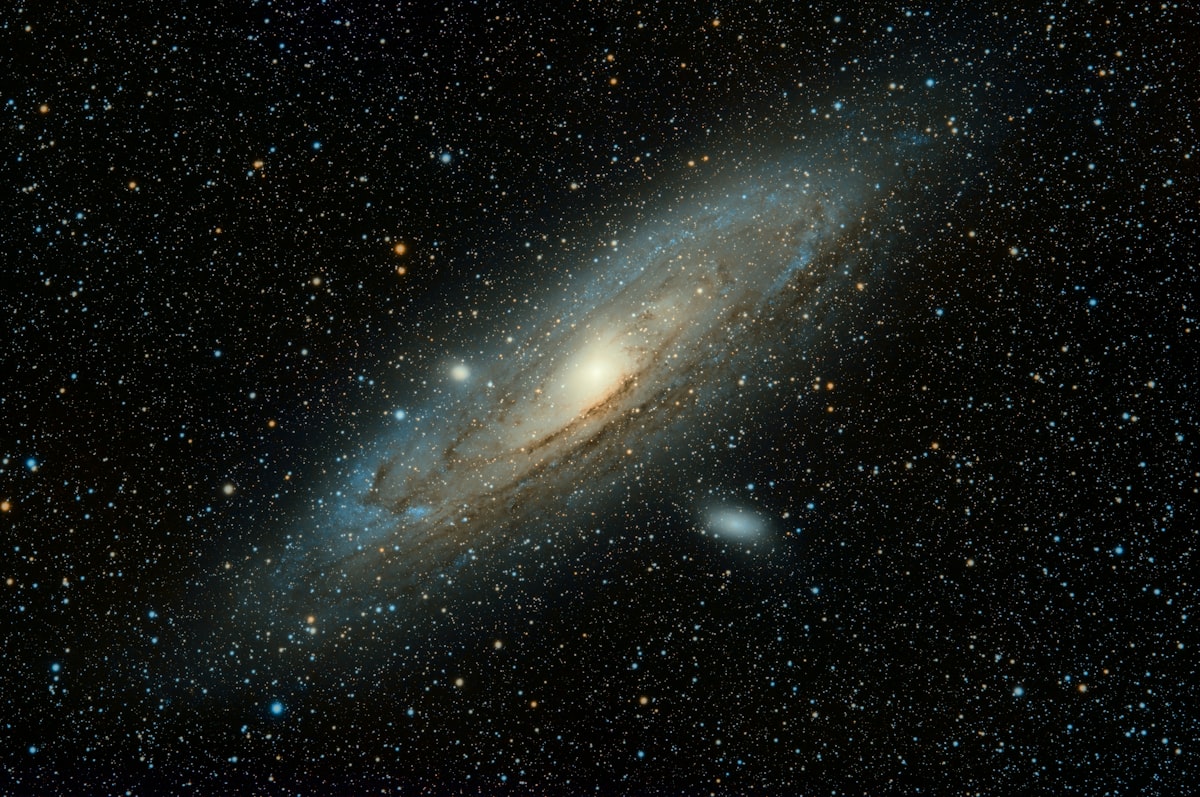
A striking high-contrast celestial visual representing compressed crystallization under immense structural thermal forces.
🪐 Detailed Quick Navigation Guide
- 1. Introduction to the Volatile World of Eternal Contrast
- 2. The Physics of Hyper-Compression and Gravitational Enclosures
- 3. Why This Scorched Landscape Features Fire and Solid Ice Simultaneously
- 4. The Nightmare Cloud Trail Stretching Millions of Miles Across the Void
- 5. Spectroscopic Verification and Molecular Stratification Data
- 6. Deep Cosmic Comparison: Burning Ice Giants vs Safe Earth
- 7. Frequently Asked Questions (FAQs)
2. The Physics of Hyper-Compression and Gravitational Enclosures
The foundation structural driver of the **gliese 436b burning ice** environment is its incredible localized gravitational force. While the planet’s upper atmosphere is blasted by extreme temperatures hitting roughly 439°C, the inner mantle layers experience a massive physical squeeze toward the planet’s core structure.
This crushing pressure alters how the water molecules associate. On Earth, water molecules expand when they freeze into natural crystalline grids. However, under the high-velocity gravitational force of Gliese 436b, the molecules are packed so tightly together that they are compacted into an exotic, dense material block known to science as Ice-X.
This hyper-dense variant behaves entirely differently than regular ice blocks. It remains completely solid at temperatures that would easily melt human industrial equipment, providing an indestructible structural matrix that underpins the eternal **gliese 436b burning ice** system tracking loop.
Astrophysicists point out that this immense structural layout forces the water envelope to remain trapped near the heavy core blocks. Despite the volatile solar winds continuously tearing across the upper envelope layers, the deep gravitational enclosure holds the structural integrity safe across billions of years.
This ongoing structural compression ensures that the inner layers cannot dissolve or escape into space. The tight packaging creates localized friction fields that generate their own thermodynamic responses, ensuring that the planet remains a premier study target for gravitational physics laboratories globally.
3. Why This Scorched Landscape Features Fire and Solid Ice Simultaneously
To understand the visual layout of the **gliese 436b burning ice** phenomenon, one must separate the concepts of chemical burning and thermal radiation. The ice itself is not a fuel source fueling a traditional fire, as there is no local oxygen pool to trigger chemical oxidation loops on the surface.
Instead, the outer layers of the solid water mass are heated to a bright glow due to the close proximity of the red dwarf host star. The planet orbits its star at a distance of just 2.5 million miles, causing the planet’s outer envelope to stay superheated while the core gravity traps the water molecules below in a permanent solid matrix.
This means that a human observer would witness a world wrapped in a blinding, superheated haze where solid material blocks appear to radiate heavy lines of energetic friction. This unique interplay of gravity and radiation gives absolute validation to the **gliese 436b burning ice** classification used by space telescopes worldwide.
Because the outer boundaries are constantly cooking, the transition zones create extreme molecular dynamics. Water particles are constantly trying to expand into airborne streams, but they are instantly held back down by the immense planetary mass, generating a perpetual battle across the high-pressure grid columns.
The sheer scale of this atomic balancing act creates unexpected horizontal structural movements. The superheated outer sheets of material move across the planet’s diameter like thick, viscous fields of glowing energy, painting a picture of cosmic horror that defies traditional classification rules.

A premium abstract depiction of superheated neon blue fluid velocity and high-pressure electric wave patterns across a dark landscape.
4. The Nightmare Cloud Trail Stretching Millions of Miles Across the Void
The real nightmare structure of the **gliese 436b burning ice** ecosystem is the massive hydrogen cloud tail that trails behind the planet as it orbits. Because the parent red dwarf star blasts the planet with relentless waves of X-ray radiation, the outer gas layers are boiled off continuously.
This creates a colossal comet-like tail of vaporized elements stretching over 9 million miles through deep space. As Gliese 436b races along its orbital axis, it essentially bleeds its outer envelope into the cold dark void, creating a breathtaking visual tracking footprint for modern space telescopes.
Any human physical probe attempting to intercept this gas giant would have to navigate through this highly charged atomic trail. The extreme velocity of the escaping hydrogen particles would create intense electrostatic friction, stripping away any potential shielding modules and blinding local tracking systems completely.
This means the system serves as an absolute planetary trap, constantly shredding its own outer boundaries while keeping its core structural matrix locked tight under gravitational pressure, ensuring the **gliese 436b burning ice** cycle stays active across cosmic eras.
The presence of this massive tail alters how the planet interacts with local space fields. The escaping elemental streams block a portion of the incoming stellar particles, creating a fluctuating magnetic tail block that pulses with rhythmic intensity as the exoplanet completes its swift two-day orbital transit loop.
5. Spectroscopic Verification and Molecular Stratification Data
Astronomers verified these incredible structural dynamics by using precise transmission spectroscopy tools during transit phases. By measuring how the red dwarf starlight filters through the outer limits of the escaping gas envelope, research computers mapped out the precise chemical density of the planet’s core tracking parameters.
The resulting data charts confirmed a distinct lack of heavy methane blocks in the upper atmosphere layers, a finding that completely surprised researchers. Instead, the atmospheric stratification profiles show an exceptional concentration of carbon monoxide molecules moving across the dark terminal boundary paths.
This unusual chemistry provides absolute scientific proof of the exotic conditions sustaining the **gliese 436b burning ice** system. The intense combinations of stellar radiation and planetary mass density create entirely new branches of chemical exploration that cannot be simulated within Earth laboratories.
As global space observation systems get updated with more sensitive tracking hardware, the structural resolution of these data models continues to improve. Scientists can now estimate the precise thickness of the Ice-X envelope layer, confirming that it represents a massive portion of the planet’s overall physical mass index.
The persistent study of these molecular data arrays allows researchers to build better long-term predictive models. By understanding how carbon and hydrogen elements divide under extreme pressure, engineering teams can design better sensory hardware for future space exploration missions targeting deep space constellations.
6. Deep Cosmic Comparison: Burning Ice Giants vs Safe Earth
Studying the unyielding conditions of extreme worlds forces humanity to look at Earth with deep admiration and care. On Earth, our water resources exist within a perfect, balanced atmospheric cushion. Rain falls as gentle freshwater, and ice remains a peaceful element confined to our beautiful polar caps.
The contrast highlights the extraordinary rarity of our local goldilocks zone. As deep space monitoring systems continue to catalog blazing gas giants drifting across the universe, they remind us that the deep void is filled with hostile environments that actively reject the presence of delicate organic matter.
These discoveries serve as a stunning educational baseline for research institutions globally. They motivate human curiosity to look beyond our local boundaries while teaching us to preserve the rare, life-supporting shield of our home planet, completely free from the dangerous realities of the **gliese 436b burning ice** environment.
By expanding human knowledge through these exceptional cosmic anomalies, we can better define the specific parameters required for true planetary habitability. This structural index helps focus future observation programs on star systems that possess the narrow baselines needed to sustain long-term biological evolution safely.
The survival of humanity relies on the narrow environmental channels that our planet automatically preserves. By documenting the extreme behavior of worlds like Gliese 436b, we gain a deeper structural perspective on the laws of nature, helping us appreciate the quiet, stable climate of our precious blue sanctuary.
Frequently Asked Questions (FAQs)
Is the burning ice on Gliese 436b actually on fire?
No, the ice is not experiencing chemical combustion. It is superheated to 439°C by its host star, creating a bright thermal glow while extreme gravity forces it to stay solid.
What type of ice exists on this extreme gas giant?
The planet features an exotic form of ice known as Ice-X, which is compacted into a hyper-dense crystalline structure by immense gravitational compression forces.
How far away is this unique exoplanet from Earth?
The extreme gliese 436b burning ice environment is located approximately 33 light-years away from Earth in the Leo constellation.
Why does the planet possess a massive trailing cloud tail?
Intense X-ray radiation from the parent red dwarf star boils off the outer hydrogen envelope layers, creating a massive trail stretching over 9 million miles into space.
How long does it take for Gliese 436b to complete one orbit?
Because it drifts incredibly close to its host star, the planet completes a full orbital revolution in just 2.6 Earth days.
7. Conclusion: Expanding Human Horizons Through Cosmic Wonders
Ultimately, whether this planet represents a thermodynamic anomaly or stands as an absolute warning, it has pushed modern space tracking into a brilliant new era of exploration. It proves that our infinite universe contains endless mysteries, and the **gliese 436b burning ice** discovery shows that reality is far more beautiful and terrifying than fiction.
Fascinated by the extreme exoplanets in our galaxy? Subscribe to our official YouTube Channel Real Vala Facts for premium video documentaries! 🪐🛰️