
1. Introduction to the Heavy Metal Atmosphere of WASP-121b
The staggering structural detection of the **wasp 121b sapphire rain** dynamic has completely transformed how astrophysics departments map out extreme thermal layers. For generations, academic tracking entities presumed that standard gas giants floating across the universe would maintain a uniform spherical structure due to hydrostatic equilibrium forces. They believed that structural mechanics kept macro objects symmetrically perfect unless affected by an external mechanical impact from an escaping stellar cluster debris ring.
However, highly advanced spectroscopic equipment locked onto a massive exoplanet drifting approximately 850 light-years away from Earth. This unique hot Jupiter exists in such close proximity to its host star that the devastating gravitational interactions generate the legendary **wasp 121b sapphire rain** sequence while warping the planet’s physical boundary lines completely, providing a brand new benchmark where planetary geology collides with extreme elemental thermal kinetics. The sheer velocity of these ionized gas bands creates an environment that acts like an interstellar forge, altering basic elements permanently.
When a planetary mass experiences crushing gravitational pull from an active star, the structural matter begins to extend along its orbital axis. The persistent observation of the **wasp 121b sapphire rain** loop proves that heavy metals can completely vaporize into the high-altitude cloud decks, shifting the baseline layout of exoplanetary geology forever and setting a system profile that challenges the foundational physics of our solar neighborhood.

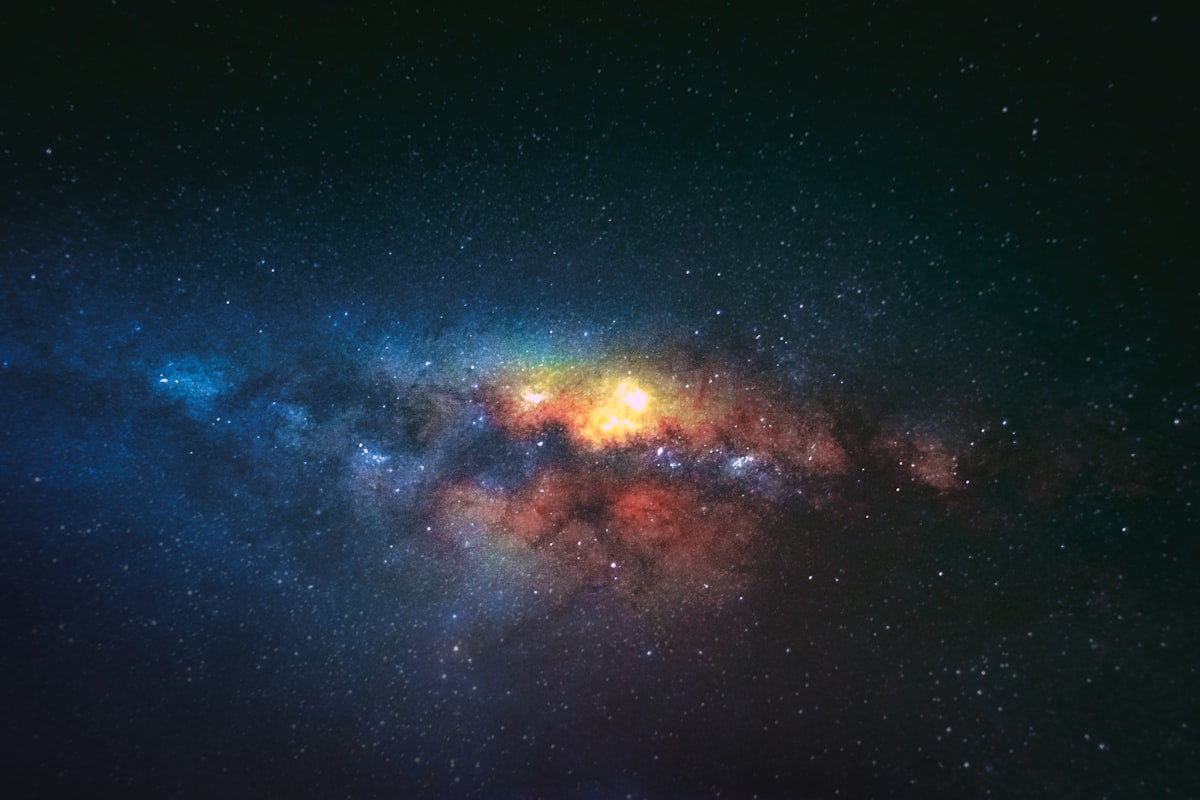
A dramatic high-contrast simulation representing extreme dayside gas giant ionization and superheated metal clouds expansion.
🪐 Detailed Quick Navigation Guide
- 1. Introduction to the Heavy Metal Atmosphere of WASP-121b
- 2. The Physics of Extreme Gravitational Elongation and Shape Warping
- 3. Why This Scorched World Vaporizes Heavy Iron and Magnesium Blocks
- 4. The Haunting Condensation of Liquid Gems Across the Nightside Hemispheres
- 5. Hubble Space Telescope Transmission Arrays Mapping the Metal Escape
- 6. Deep Cosmic Contrast: Hellish Exoplanets vs Safe Earth Habitats
- 7. Frequently Asked Questions (FAQs)
2. The Physics of Extreme Gravitational Elongation and Shape Warping
The foundation structural driver of the **wasp 121b sapphire rain** ecosystem is its close proximity to its active host star. The gas giant orbits its star at such a short distance that the localized gravitational forces pull the planet’s envelope apart via intense tidal friction fields. This close configuration places the world well inside a volatile zone where spatial structures begin to shift their geological core axes under persistent pull vectors.
This extreme layout effectively stretches the entire planetary body along its orbital path, twisting it from a typical sphere into an elongated shape resembling a football or an egg. This massive geometric deformation means the structural elements are kept under highly volatile thermodynamic changes. The stretching forces are so extreme that the structural profile shifts significantly between the daytime hemisphere and the nocturnal face tracks.
Astrophysicists point out that this immense structural stretching stretches the outer layers of the exoplanet far out into space. The local gravity cannot keep the hyper-heated gas envelope contained near the dense core, creating massive network channels of venting gas blocks that alter the overall mass density parameters recorded by satellite telescope systems over extended observation windows.
3. Why This Scorched World Vaporizes Heavy Iron and Magnesium Blocks
On Earth, metals like iron and magnesium are incredibly dense solid foundations of geological formations and human industrial assets. However, on the superheated dayside of the **wasp 121b sapphire rain** environment, the intense solar radiation vaporizes these hard minerals into a clear, transparent airborne gas that behaves exactly like standard vapor units do under lower localized temperature frames.
These gaseous heavy metals migrate toward the upper cloud decks, mixing with superheated currents that move thousands of miles per hour across the planet’s diameter. This unique state of matter forms massive invisible metallic storm systems that span across entire hemispheres blocks, generating global current grids that carry ionized heavy components across structural terminator corridors.
This unparalleled level of atmospheric expansion changes the rules of regular chemistry. The continuous upward velocity of the metallic elements forms a heavy haze layer that traps heat, creating a brutal thermal greenhouse block that further stretches the outer boundaries of the gas giant, forging the cloud decks into a state of continuous hydro-dynamic expansion against cold outer space vectors.
Because the dayside stays locked under permanent stellar radiation, the vaporized iron cannot settle back down toward the core structure. It remains suspended high up in the stratosphere, waiting to be driven along the high-velocity jet streams toward the darker, colder side of the world, where thermal gradients drop swiftly enough to completely rearrange molecular behavior patterns.

A premium abstract illustration depicting swirling metallic liquid drops and purple-blue gas vortex networks on the nightside track.
4. The Haunting Condensation of Liquid Gems Across the Nightside Hemispheres
The true marvel of the **wasp 121b sapphire rain** cycle occurs when the vaporized metal streams cross over into the permanent nightside hemisphere. On this dark side of the planet, temperatures experience a sudden drop, plummeting to around 1500°C, establishing a sharp pressure gradient that drives winds across the terminator line at intense speeds.
While this nightside thermal baseline is still hot enough to melt human structural equipment or industrial composites, it is cool enough for the vaporized minerals to condense. Vaporized aluminum and titanium blend together in the high-altitude cloud bands, forming microscopic liquid crystals that compose the baseline chemistry of corundum minerals like rubies and sapphires.
As a result, the dark night skies are filled with churning clouds of molten gems. High-velocity winds drop these supercooled elements as a glittering, blinding downpour of **wasp 121b sapphire rain** droplets that cut through the dark gas valleys below with exceptional velocity, painting a visual picture of terrifying planetary wealth mixed with unyielding atmospheric destruction.
This means the planet features a terrifying yet beautiful ecosystem where precious gems behave exactly like liquid water drops do on Earth. The continuous cycle of vaporization on the dayside and gem condensation on the nightside forms a permanent thermodynamic loop across the cosmos, demonstrating how diverse matter becomes under extreme spatial conditions.
5. Hubble Space Telescope Transmission Arrays Mapping the Metal Escape
Astronomers managed to track these incredible structural data points by using the precise spectroscopic arrays of the Hubble Space Telescope and active tracking networks. By analyzing how the host starlight filtered through the planet’s outer boundary lines during its quick transit phase, computers mapped out the chemical elements escaping into space sectors.
The resulting spectrographic line data confirmed that the vaporized magnesium and iron gases are blown out far past the planet’s Roche lobe limit. This means the planet is actively shedding its own physical mass index, trailing a colossal comet-like path of heavy metals behind it in its orbital trajectory, drifting like a metallic ghost across its host system field tracks.
This crucial breakthrough has forced researchers to update their global tracking algorithms for gas giant lifecycles. The extreme **wasp 121b sapphire rain** environment shows how intense stellar gravity can strip away a planet’s outer gas envelope, leaving behind a heavily modified core structure over long eras, helping astrophysics build richer structural profiles for faraway galaxies.
6. Deep Cosmic Contrast: Hellish Exoplanets vs Safe Earth Habitats
Analyzing the hostile mechanics of the **wasp 121b sapphire rain** loop causes humanity to evaluate our home ecosystem with immense appreciation. On Earth, our atmospheric pressures and gentle solar distances shield us from extreme elemental distortion and atomic friction traps, creating an organic sanctuary where fragile biology remains perfectly sustained.
The profound contrast between our peaceful rains and the molten sapphire downpours of WASP-121b shows the beautiful rarity of our biosphere. As deep space sensors continue to catalog extreme gas giants across the galactic ocean, they reveal that the universe holds environments far more volatile than any story could write, forging human metrics to reconsider what defines a world configuration.
These cosmic tracking models provide an invaluable educational baseline for universities and planetary research organizations worldwide. They remind us that the deep universe is an unpredictable arena of physical forces, pushing our curiosity to explore the boundaries of matter while motivating our structural science teams to safeguard the quiet, safe climate lines of our rare blue oasis.
Frequently Asked Questions (FAQs)
Why is WASP-121b shaped like a football?
It is shaped like a football because the intense gravitational pull of its host star stretches the planet’s gas envelope along its orbital axis via extreme tidal forces and close proximity vectors.
What creates the sapphire rain on this exoplanet?
Vaporized aluminum and titanium from the blistering dayside drift to the colder nightside, condensing into liquid corundum crystals that fall as liquid sapphires and rubies down across the valley channels.
How far away is this hot Jupiter from Earth?
The extreme wasp 121b sapphire rain configuration is located approximately 850 light-years away from Earth, drifting within the interior tracks of its active parent constellation framework.
Can human mechanical probes survive inside the nightside atmosphere?
No, the intense winds and molten gem rain falling at thousands of miles per hour would easily destroy and melt any human exploratory instrumentation or hard composite shields within fractions of a second.
7. Conclusion: Expanding Human Horizons Through Cosmic Wonders
Ultimately, whether this football-shaped world represents an incredible physical warning or stands as a mesmerizing thermodynamic anomaly, it has successfully pushed modern astronomy into a brand new era of weather tracking and strategic observational physics. Our wide universe contains endless structural mysteries, and the **wasp 121b sapphire rain** discovery shows that the truth out there is both beautiful and terrifying.
To examine the complete historical database of these massive outer space anomalies, explore the highly detailed analytics available on the official homepage layout of Real Vala Facts. Subscribe to our official YouTube Channel for premium video documentaries! 🪐🛰️