
Table of Contents
ToggleTrES-2b: The Terrifying Pitch-Black Planet That Actively Eats Light 🪐⚫

🪐 Quick Navigation Guide
When we look at our own solar system, gas giants like Jupiter and Saturn stand out due to their bright, colorful bands of swirling clouds. These gaseous clouds reflect a massive amount of solar radiation back into space, allowing us to see them beautifully through telescopes. However, deep in our galaxy, orbiting a distant star in the Draco constellation, lies a world that operates on a completely different and terrifying set of physical rules. Welcome to TrES-2b, a cosmic anomaly widely recognized as the darkest planet ever discovered in the observable universe.
First identified in August 2006 by the Trans-Atlantic Exoplanet Survey using the Kepler Space Telescope, this massive exoplanet is slightly larger and heavier than Jupiter. However, unlike any planet in our cosmic backyard, TrES-2b absorbs almost all stellar light that strikes its atmosphere. It reflects less than 1 percent of incoming light, making it chemically and physically darker than coal, black paint, or even pure volcanic obsidian.
⚫ Atmospheric Mechanics: Why Exoplanet TrES-2b is Pitch Black
The extreme darkness of TrES-2b is not a simple cosmic coincidence; it is the direct result of violent atmospheric physics and extreme chemical composition. TrES-2b is scientifically classified as a “Hot Jupiter,” orbiting dangerously close to its parent star, GSC 03549-02811. The planet rests at a distance of just 3 million miles from its host star, which is a fraction of the distance between Mercury and our Sun. Because of this tight proximity, its atmosphere is constantly superheated to extreme levels:
At these blistering temperatures, light-reflecting clouds made of ammonia or water vapor cannot form. On Jupiter, these clouds reflect more than a third of the sunlight. But on TrES-2b, the intense heat keeps the atmosphere entirely gaseous and dark. Instead of reflecting clouds, the planet’s sky is dominated by vaporized, light-absorbing compounds. Scientific models and spectroscopic analyses suggest that the atmosphere is rich in gaseous sodium, potassium, and titanium oxide. These vaporized metals act like a massive planetary sponge, absorbing light waves across the visible spectrum rather than scattering them.

🔴 A Demonic Ember: The Glowing Crimson Horizon of TrES-2b
If you were to view TrES-2b from a short distance in a spacecraft, it would not be entirely invisible. While it is pitch-black and reflects no stellar light, the planet is incredibly hot. This extreme heat causes the planet to emit its own thermal radiation directly into the cold vacuum of space.
This causes the planet to emit a very faint, eerie, crimson-red thermal glow. The visual effect resembles a glowing coal left in a dark fireplace, or a hot piece of iron cooling down. This faint red light, mixed with the planet’s absolute chemical blackness, creates a truly hellish landscape that looks more like a dark fantasy than actual scientific reality. It is a silent, burning shadow drifting around a blazing star.
🌋 Extreme Exoplanets: TrES-2b vs KELT-9b
Our universe is a place of unbelievable extremes. While exoplanet TrES-2b is busy devouring light in absolute darkness, other worlds are blazing so hot that they actually outshine stars. If you are fascinated by these incredible celestial anomalies, you must read our detailed breakdown of the hottest known world in space: KELT-9b: The Extreme World Where Skies Rain Molten Iron.
Comparing these two planets shows the vast differences in the cosmic landscape. While one boils in brilliant, blinding heat, the other remains hidden in plain sight, absorbing solar energy silently.
Frequently Asked Questions (FAQs)
Q1: How far is exoplanet TrES-2b from Earth?
A1: TrES-2b is located approximately 750 light-years away from our solar system, situated in the northern constellation of Draco.
Q2: What is the primary chemical composition of its atmosphere?
A2: The planet’s superheated atmosphere consists mostly of gaseous sodium, vaporized potassium, and titanium oxide, which actively absorb light instead of reflecting it.
Q3: How was TrES-2b discovered?
A3: It was discovered in 2006 by the Trans-Atlantic Exoplanet Survey using the transit method, where scientists measure the temporary dip in a star’s brightness as a planet passes in front of it.
Our Editorial Perspective on Cosmic Wonders
At Real Vala Facts, examining extreme exoplanets like TrES-2b makes us realize that nature’s imagination is far wider and more terrifying than our own. It challenges our basic human concepts of light, heat, and planetary atmospheres. While we spend centuries looking for bright, shiny stars and colorful earth-like worlds, the universe hides some of its deepest and most profound secrets in absolute, light-devouring darkness. It proves that space exploration will always be full of shocking anomalies.
🚀 Conclusion: The Beautiful Balance of Earth
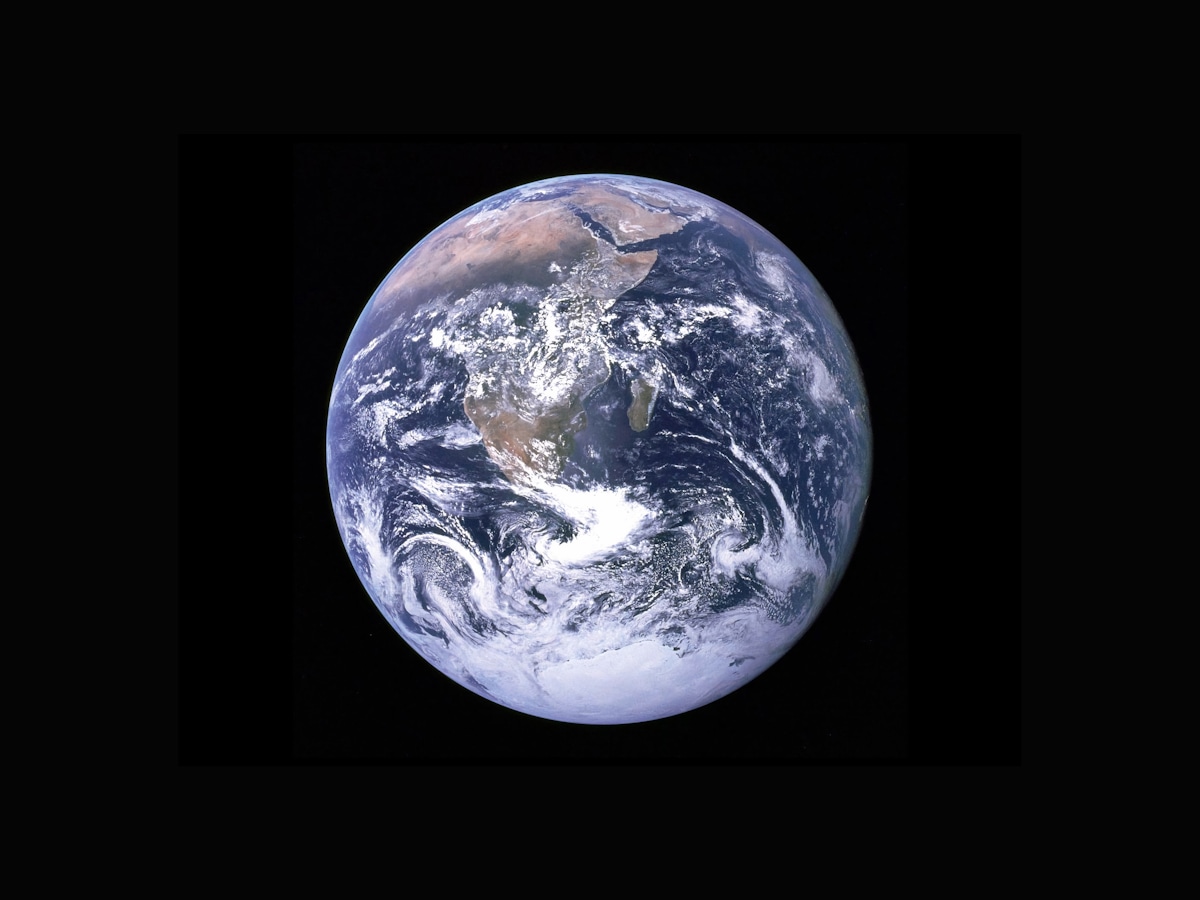
Looking at the extreme, light-eating darkness of TrES-2b makes us appreciate our home planet even more. Earth’s perfectly balanced atmosphere allows beautiful sunlight to scatter, creating our gorgeous blue skies, white clouds, and vibrant green landscapes. It is a peaceful contrast to the chaotic, superheated, and terrifying worlds that drift silently across the cosmic ocean.
Fascinated by the extreme exoplanets in our galaxy? Subscribe to our official YouTube Channel Real Vala Facts for premium video documentaries! 🪐🛰️